Tuesday, January 11, 2011

The Battle


These ties benefit to Apple, but did not they play tricks? On the consumer market, Samsung has always been a serious competitor. With 280 million mobile phones sold in 2010, it is the second largest manufacturer of mobile phones. In France, the company is also the first place.

Of these 280 million, we find the Samsung S Galaxy, which alone accounts for 1 / 28 sales of Samsung mobile phones with 10 million units sold in 2010. This is the big bestseller of 2010, with its American cousin the iPhone 4. And there's no need to go ask officials to ask Samsung the reason for success, two simple images are able to explain many things.

In general, smart phones are very similar, but in this case, the resemblance is more striking than usual: middle button, outline rounded square icons arranged in 4x4 grid on a black background with a dock clearer containing four main icons. Everything is there, many people might believe in an iPhone. Samsung and plays on this illusion, by copying the same positions of the iPhone commercials.

Yet, why consumers purchase a Samsung S Galaxy more than an iPhone, while the latter enjoys a fashion show and especially good reliability? Simply because his cousin Korean is much cheaper, whether or not grant operator.

And this does not stop at S Galaxy; Samsung reuses the same business strategy with its Galaxy Tab, a touch pad as the iPad, shipping Android and a 7-inch screen. Presented thus far it seems to stand out from the iPad with its 10-inch screen, but it is clear that design and interface are similar.

White-backed, rounded edges, square icons, wallpaper with an island, the similarities are disturbing ... For the Galaxy Tab, things are more complex. Sold € 599, the tablet Samsung no longer enjoys the cost advantage. The iPad 3G is sold as expensive, but has a bigger screen. She has a better positioning in the operators with a more generous subsidy. But the offers subsidies for these products are struggling to attract consumers. Result, sales of the Samsung Tablet are far below the iPad.

We could still continue the comparison between product lines and Samsung American counterparts, with for example the Samsung Galaxy player and iPod touch, or the brand new ultraportable Samsung technical clone of the MacBook Air.

In the end, which differs from Apple Samsung commercially, it is positioning. Samsung is therefore aimed at "mass market" while Apple is the high end. And it is this "mass market" that is impervious to Apple and allows Android so quickly burst onto the smartphone segment.

Wednesday, January 5, 2011

The reality is more complex


In fact, the design of the A4 has been provided by Samsung and Intrinsity. The latter was subsequently bought by Apple. This processor is not much different from that found in the Samsung S Galaxy, Galaxy Tab and recently the Google.

But why work with Samsung more than another? At the time of designing the A4, the Hummingbird was one of the most effective flea market, more powerful example than the 1 GHz Qualcomm's Snapdragon found in the HTC Desire among others. In addition, the Korean company is a longtime partner of Apple: it's one of its main suppliers of flash memory. The two companies had even considered in 2005 to build a plant dedicated to the production of memory before being overtaken by the antitrust authorities in Korea.

More broadly, Samsung has the advantage of having a production capacity formidable. Less media attention than the Cupertino company, the Korean company is yet the number one player in the high-tech industry. In 2010, its turnover amounted to 138.7 billion dollars is more than the combined turnover of Apple and Microsoft. The Korean company has indeed a vast field of action: telephones, televisions, printers, tablets, but also an activity in semiconductors and as a manufacturer of LCD panels.

These successful relationships should be Apple's first customer of Samsung in 2011. According to some estimates, Apple should spend its $ 7.8 billion. Last January, the Cupertino evoked a strategic $ 3.9 billion over two years. To say that Apple is positioning itself to get favors from Samsung on its future advances in processors (Hummingbird), Platform (Orion) or to screen AMOLED-Retina-Display ", it does There is only one step.

Apple and Samsung: the enemy brothers


Apple and Samsung are currently two of the largest companies in the field of consumer electronics. They have much in common, often work together, depend on each other on certain points, but are also competing in highly strategic. So, Apple and Samsung partners can they stay long-term goals?

With the success in the first instance of the iPod and the iPhone and iPad, Apple has become one of the biggest buyers of components in the world. Sign a contract with the Cupertino Company is the assurance of almost an order book well stocked for many months. Apple has often used his position elsewhere to rain or shine on the market for flash memory.

If in the 80s at the time of the Macintosh, Apple could afford to live in isolation and develop almost everything she, in a globalizing world, this is simply not possible.

Corporation deemed to be tough in business, Apple has managed to forge some strategic partnerships. Besides Samsung, Intel may be mentioned (for the supply of processors on the Macintosh), NVIDIA (which has created several GPUs for Apple) and Foxconn (one of the largest subcontractors to Apple). Among these companies, it is certainly with Samsung that relationships are more complex. Apple remains true to its culture of secrecy and rarely evokes its relations with its partners.

Proof, if needed, she remained evasive on the processor design A4. On its website, the Apple brand wrote: "Apple engineers designed the chip A4 into a mobile processor both incredibly powerful and energy efficient.”

Friday, December 31, 2010

Mac Book Pro 13 "Core i7: The Turbo Boost function well


The 2.7 GHz Core i7-2620m team that the Mac Book Pro 13 "high-end mobile chip with the highest frequency available in the Intel catalog. It may even reach 3.4 GHz on a heart through the turbo boost, but Apple has apparently it off this feature to avoid overheating.

The Cupertino Company is yet to promote this function on the product page of Mac Book Pro, clearly indicating the frequency of 3.4 GHz that only the Core i7-2620m can be achieved in the current range. PC Pro has never yet managed to achieve this frequency in these tests, the processor remains hopelessly nailed to 2.7 GHz. Core i7-2720QM Mac Book Pro 17 "has no trouble reaching its maximum frequency of 3 GHz, so its four cores are at 95 degrees.

That's about the same temperature reached by the two cores of the Core i7-2620m Mac Book Pro 13 "at full speed to 2 GHz. This temperature is certainly high, but rather common, however, can only imagine the Turbo Boost, the processor could blithely exceed 100 °, temperatures this time potentially problematic. The English site therefore advances the hypothesis that Apple has disabled the Turbo Boost on the chip to avoid overheating. Notebook Journal (via) confirms this hypothesis: their copy is even temporarily increased to 798 MHz time to control its temperature.

Even without turbo boost, the Mac Book Pro 13 "Core i7 is a very fast machine. The question is whether Apple disables the default Turbo Boost, or if Mac OS X disables the fly: it will be difficult to know, rise in mean temperature rise mechanically. Having ourselves a Mac Book Pro 13 "Core i7 at our disposal, we will try to verify this behavior: we will update this article accordingly.

[UPDATE] Our own tests show that the Turbo Boost is indeed active on the Core i7-2620m Mac Book Pro 13 ". On two hearts, the incidence rises to 3.19 GHz (multi-core optimized implementation), so that it goes up to 3.33 GHz on a single heart (non-optimized implementation; Turbo Boost 2.0 is supposed to extend the "boost" Yet, we observe that the frequency goes down enough quickly, in very small increments (Intel explained that Core i7-2620m had 7 frequency ranges between 2.7 and 3.4 GHz).

The falling speed of the Turbo Boost seems to be correlated to temperature: the "boost" is much better during the first tests (when the processor runs at about 80 °) during the following (the processor then proceeds to over 90 °, with a peak at 97 °). It seems that Mac OS X and / or processor finely monitorent frequency to avoid overheating: it is again a function of Turbo Boost 2.0. Even in influencing the speed of the fans for the processor to overheat (remaining under the 110 ° measure), we observed no deactivation of cores or drastic fall frequency to avoid overheating.

In short, it seems that this processor is behaving as it should, with a much finer granularity of the "boost". PC Pro Notebook Journal as a tool used by Intel under Windows to test frequency: perhaps he is assigned a bug, or maybe the management of the Turbo Boost this particular model of processor is different ( or faulty) on this platform.

Saturday, December 25, 2010

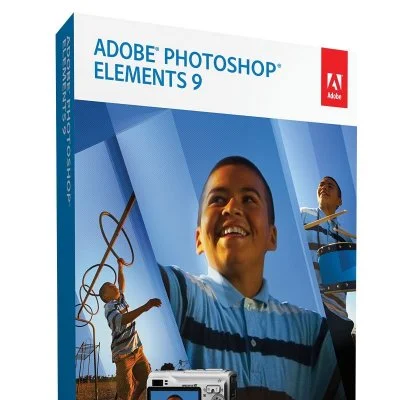
Adobe introduced the "ninth Elements"


The "Ninth Elements", as Adobe calls it, was presented to the press today. The big news of the ninth edition of consumer products from Adobe Premiere Elements of the arrival on the Mac.

The entire range of Elements is now available on Mac OS X. Bridge lovers will be disappointed: the browser interface on Mac Adobe disappears in favor of an organizer who was brought from the Windows version. Files, projects and catalogs are fully compatible between both platforms. Managing photos and videos, it takes the tabbed interface that can be found for example in Lightroom: Organizing (with management of keywords and display by date), edit, create (using templates) and share (with integration of social networks).

As for video, Premiere Elements 9 is therefore coming to Mac. The tabbed interface is again formatting: Organize tab is a bin with integrated import interface, the Edit tab contains themes and effects, the Menus tab of the disk to create DVDs or BDR, and Sharing tab to share .... We like it or not, but we must admit that seems very linear operation for beginners. Unlike iMovie, Premiere Elements is multitrack audio / video (99 tracks).

We can use files from different sources into one project: the first adaptation project in the format of the first file. The files will be up scaled or down-accordingly. Premiere Elements 9 is able to clean background noise of a video taken by example with a telephone or a small HD camera. The impact compresses the sound a bit, but is really effective. Premiere Elements 9 loads over 70 effects to the questionable value, but is mostly modified at will - and are mainly used on live video, without rendering time.

Similarly, the DVD menus are the default controls the placement of videos, but it is possible to modify and enrich them, depending on the degree of experience. If we can send his film on DVD or Blu-ray (one will appreciate the humor of Adobe on the topic, since we have not finished waiting on Mac compatible players), we can also make a kind of DVD Web, a Web page that appears as a menu and allows to read videos in an interactive way ... in Flash (FLV or MP4).

Image side, Photoshop Elements 9 inherits some features of Photoshop CS5, but also embellished resolutely public functions. Photoshop Elements 9 integrates also a gallery of filters in fashion, as the effect or Lomo Pop Art, but also the effects of photomontage. These effects are presented as "recipes", built in tutorials to Photoshop Elements immediately containing the necessary tools. If you are a little more experienced, you can always have access to layers that have helped create the effect or photomontage.

Elements 9 uses the engine of Photoshop CS5 for example offer repair or correction of the photos shown taking into account the content: you can now automatically fill the missing areas of a panorama, rather than the crop, or remove elements noise of an image (a kind of automated cloning tool). The results are convincing ... until we do not zoom to 100%. Finally, like Photoshop Elements Premiere 9 integrate social networks: it is possible to export his creations on Facebook or Flickr.

Thursday, December 16, 2010

Indeed, it is difficult to imagine that Google may delete the H.264 on YouTube


Now in only 32.89% of Internet users could continue to visit in the state, an unthinkable sacrifice. Even when Flash will integrate WebM will require that users update their version to be able to take advantage of: the current version of Flash does not pose this problem (Flash supports H.264 since version 9 was released in December 2007). Moreover, it is hard to imagine that Google has not contractually committed with partners like Apple to maintain compatibility with their devices.

The commitment of Google behind WebM at least has the merit of clarifying the situation regarding the giving of the codec on the field of patents: MPEG-LA has repeatedly stated that the free format violated certain of its patents, and that license was under development. The industry association cannot shake indefinitely without its threats would be implemented, and assuming that they are based, Google would be a prime target, except for example, at least for damages that it might represent. Adding however that nothing prevents the MPEG-LA to choose sparingly opponents court, especially since Google has made it clear she would not come to the aid of its partners.

In short, Google's decision is a stir of HTML5, which only give relevance to Flash, where Apple had done the opposite. And so exactly was the effect of strip searched? By restoring the importance of Flash, Google could very well work to the advantage of Android, which supports this format, unlike the IOS ... while going for the white knight of free formats.

But Google did not she simply followed the logic of ecosystem? Indeed, ownership of a video codec, it was destined to become a standard, not a major strategic issue, since interoperability is a crucial element specifically for industry standards. Exclusivity is the less put on a free. Google can certainly preside freely on the future of the codec and decide its future developments, but the side effects seem even more decisive than this one advantage, at least in the medium term.

These explanations do they justify the significant costs of investing behind Google WebM? He has still cost $ 100 million into the acquisition and conversion of over 120 million videos on YouTube will certainly be expensive that few others can afford. These figures are still to put into perspective: according to various estimates, the deficit would amount to YouTube about 500 million dollars just for 2009. A straw in comparison with 6.5 billion profits made last year by Google.